Personal website

Irene-Angelica Chounta

Professor of Computational Methods in Modeling and Analysis of Learning Processes
University of Duisburg-Essen

Short Bio

Portrait of Irene-Angelica Chounta

My name is Irene-Angelica Chounta and currently, I am a Professor in "Computational Methods in Modeling and Analysis of Learning Processes" at the Department of Human-centered Computing and Cognitive Science at the Faculty of Computer Science, University of Duisburg-Essen (UDE) in Germany. My research focuses on computational learning analytics for technology-enhanced learning, Artificial Intelligence in Education (AIED) and educational technologies. My main research interest is to model learners' behaviour in order to provide adaptive and personalized feedback, either in formal or informal contexts.

I was born and raised in Athens, Greece and I have lived and worked in Germany, Estonia, and the USA. I am an Executive Board Member of the International Artificial Intelligence in Education Society (IAIED), and a member of the International Society of the Learning Sciences (ISLS) and the European Association for Technology Enhanced Learning (EATEL).

I believe that education is the answer to many questions, along with kindness. I also believe in working together to achieve common goals. My overarching goal is to empower humans to aim for their dreams and beyond of what is "possible," and to use my privilege and power to provide opportunities and support those around me — especially youth from underrepresented groups and minorities. Everyone has a right to education.

At UDE, I lead the research group colaps, where we explore the use of computational data analytics, namely machine learning and data mining, with the aim to support learning from the perspective of personalization and adaptation, and in relation to tutoring feedback and scaffolding. You can find out more about colaps at uni-due.de/colaps.

CV

Download CV (PDF) →

2023 – today

Professor (W2 tenured)

University of Duisburg-Essen

Leading the research group colaps, exploring computational methods such as Artificial Intelligence, Learning Analytics and Data Mining to model how we learn in both formal and informal learning contexts.

2021 – 2023

Junior Professor (W1)

University of Duisburg-Essen

Focused on computational methods for modeling and analysis of learning processes across intelligent learning environments, online learning, and project-based learning.

2018 – 2021

Senior Researcher

University of Tartu

Used learning analytics to provide feedback and guidance to students and to scaffold learning, drawing on data from the university's Study Information System for teacher and student dashboards.

2016 – 2018

Postdoctoral Fellow

Carnegie Mellon University

At the Human-Computer Interaction Institute in Pittsburgh, designed a student model evaluating understanding of a physics curriculum to adapt tutorial dialogues in content, style, and language.

2014 – 2016

Postdoctoral Researcher

University of Duisburg-Essen

Member of the COLLIDE research group, using learning analytics to analyze learning activities in computer-supported collaborative learning environments, online labs, and MOOCs.

2009 – 2014

Ph.D. in Educational Technologies and HCI

University of Patras

Thesis on using learning analytics to assess collaboration quality in CSCL activities, proposing and implementing an automatic rater of collaboration quality via time series analysis.

2001 – 2005

Diploma in Electrical and Computer Engineering (Master's equivalent)

University of Patras

Studied with an emphasis on electronics, processors, and computer architecture; diploma thesis proposed an information system for monitoring geographically distributed networks.

1996 – 2001

Diploma, Computer Systems Engineering

ATEI Piraeus

First higher academic degree, working with Prof. Sotiris Leventis on computer networks as a member of PeLAB.

Research

Download Research Statement (PDF) →

01

Theory-informed computational proxies and learner models

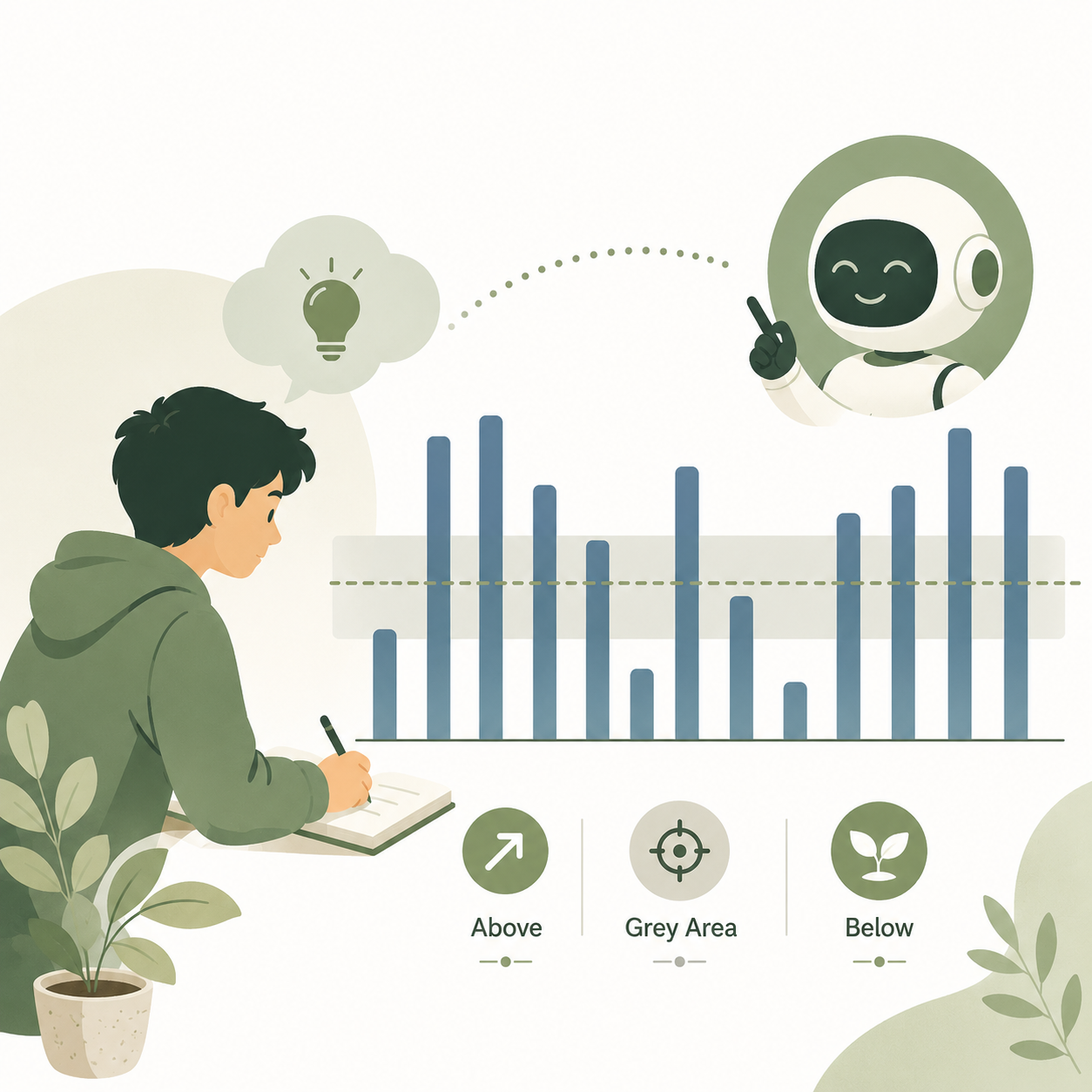
Illustration of the Grey Area concept for student modeling

Modeling when and how confidently a computational model can predict a student's behavior according to theories of learning, rather than the behavior alone, can reveal the moments that matter most for learning and intervention, pointing toward a broader potential for learning models that don't just track performance, but learn to recognize their own uncertainty as a signal for where and when to act (Chounta et al. 2017; Schulze Bernd & Chounta, 2022; Sheng & Chounta 2026; Chounta & Avouris, 2016; Chounta & Carvalho, 2019)

02

AI in the
Classroom

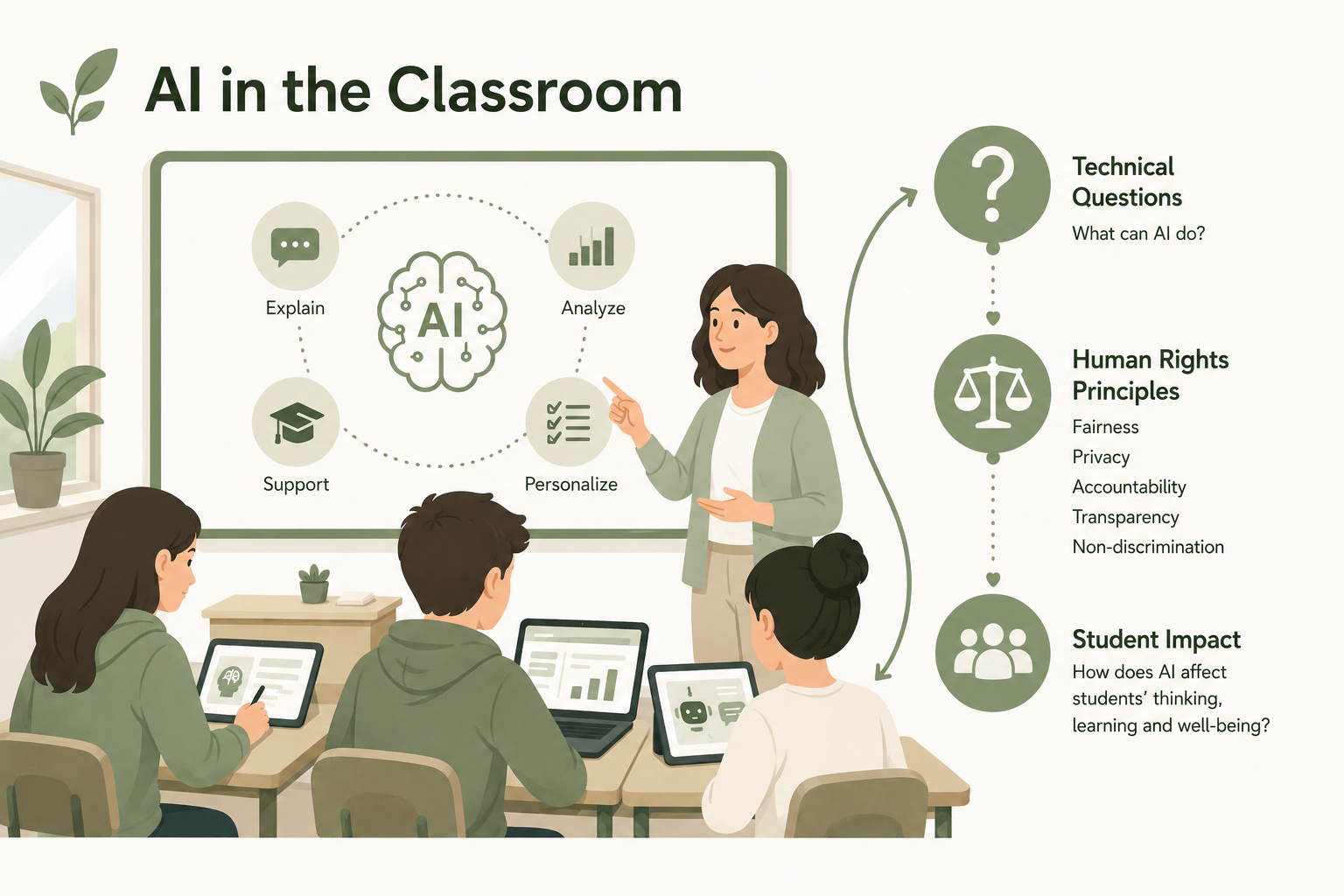
Illustration of AI in the classroom, connecting technical questions to human rights principles and student impact

Exploring the ingtegration of AI in classrooms (Chounta et al., 2024), the impact of the use of AI on cognitive dimensions of AI in classrooms and the fair, and ethical use of AI in education (Chounta et al. 2022; Holmes et al, 2022) I argue that when we ask technical questions about AI in education, we need to connect them to the same human rights principles that already guide policy elsewhere. That way, policy keeps up with how these tools actually affect students' thinking, not just with what the technology can do.

03

Reinventing Project-based Learning

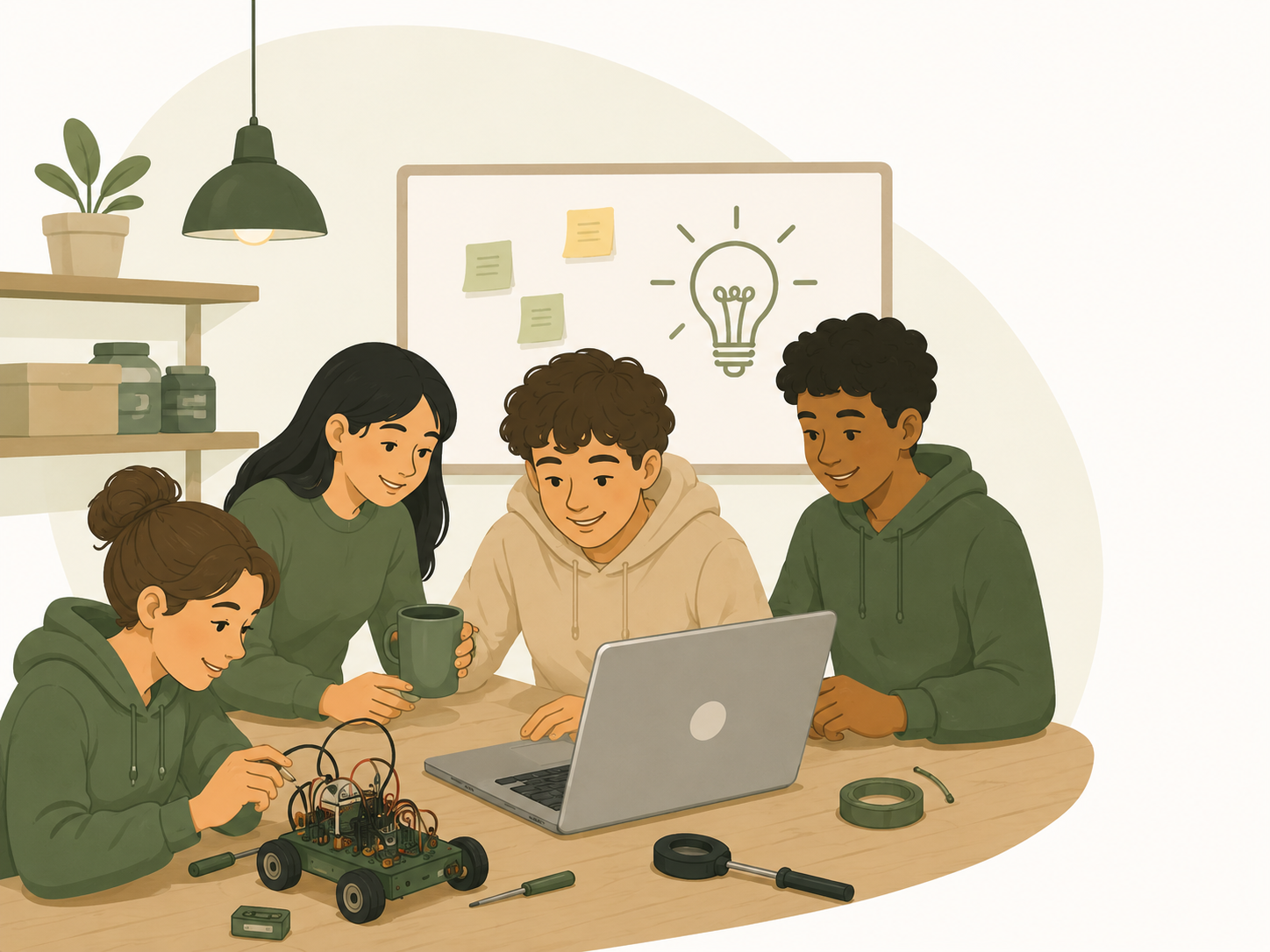
Illustration of students collaborating on a project-based learning activity

While maker/hack scenarios are usually informal, extracurricular activities, their real value lies not in the final product but in the whole social process behind it, the knowledge-seeking, peer influence, self-reflection, and sharing, which suggests these competencies can be deliberately cultivated by bringing maker culture into the classroom and turning hackathons, devcamps, and makerspaces into structured learning opportunities (Schulten, Nolte & Chounta, 2027; Schulten & Chounta, 2023; Chounta, Manske & Hoppe, 2017).

Selected publications

The full list can be found at: Google Scholar Profile

Schulten, C., Nolte, A., & Chounta, I. A. (2027). HackEDX: Towards a methodological framework for Hackathons as educational experiences. Educational Technology & Society, 30(1), 196-212. [DOI]

Sheng, K., & Chounta, I. A. (2026). Beyond One-Size-Fits-All: Personalizing Computational Proxies of the Zone of Proximal Development Through Help-Seeking Behaviors. In Artificial Intelligence in Education (AIED 2026), LNCS vol. 16585. Springer, Cham. [DOI]

Chounta, I. A., Ortega-Arranz, A., Daskalaki, S., et al. (2024). Toward a data-informed framework for the assessment of digital readiness of higher education institutions. International Journal of Educational Technology in Higher Education, 21, 59. [DOI]

Schulten, C., & Chounta, I. A. (2024). How do we learn in and from Hackathons? A systematic literature review. Education and Information Technologies, 29, 20103-20134. [DOI]

Chounta, I. A., Limbu, B., & van der Heyden, L. (2024). Exploring the Methodological Contexts and Constraints of Research in Artificial Intelligence in Education. In Generative Intelligence and Intelligent Tutoring Systems (ITS 2024), LNCS vol. 14798. Springer, Cham. [DOI]

Schulze Bernd, N., & Chounta, I. A. (2024). Beyond the Grey Area: Exploring the Effectiveness of Scaffolding as a Learning Measure. In Artificial Intelligence in Education (AIED 2024), LNCS vol. 14829. Springer, Cham. [DOI]

Chounta, I. A., Bardone, E., Raudsep, A., et al. (2022). Exploring Teachers' Perceptions of Artificial Intelligence as a Tool to Support their Practice in Estonian K-12 Education. International Journal of Artificial Intelligence in Education, 32, 725-755. [DOI]

Holmes, W., Persson, J., Chounta, I. A., Wasson, B., & Dimitrova, V. (2022). Artificial intelligence and education: A critical view through the lens of human rights, democracy and the rule of law. Council of Europe.

Chounta, I. A., & Carvalho, P. F. (2019). Square it up! How to model step duration when predicting student performance. In Proceedings of the 9th International Conference on Learning Analytics & Knowledge (LAK19), pp. 330-334. ACM. [DOI]

Chounta, I. A., Manske, S., & Hoppe, H. U. (2017). "From Making to Learning": introducing Dev Camps as an educational paradigm for Re-inventing Problem-based Learning. International Journal of Educational Technology in Higher Education, 14, 21. [DOI]

Chounta, I. A., Albacete, P., Jordan, P., Katz, S., & McLaren, B. M. (2017). The "Grey Area": A Computational Approach to Model the Zone of Proximal Development. In Data Driven Approaches in Digital Education (EC-TEL 2017), LNCS vol. 10474. Springer, Cham. [DOI]

Chounta, I. A., & Avouris, N. (2016). Towards the real-time evaluation of collaborative activities: Integration of an automatic rater of collaboration quality in the classroom from the teacher's perspective. Education and Information Technologies, 21, 815-835. [DOI]


Funding

MORAL-ALIGN

The Moral Underpinnings of Disinformation Acceptance in Human-AI-Interaction: The Case of Moral Alignment.

DFG Priority Program Rethinking Disinformation (Re:DIS) — 3 years (Nov 2026 – Oct 2029)

CoCreatePI

An integrated framework for delivering educational hackathons to support creativity and entrepreneurship in Higher Education Institutions.

Erasmus+ KA220-HED – Cooperation partnerships in higher education — 3 years (Oct 2025 – Sep 2028)

Overall budget: 400,000 EUR  /  own institution: 127,220 EUR

AI-PowerEDCo-PI

Ethical and Inclusive AI for Higher Education.

Erasmus+ KA220-HED – Cooperation partnerships in higher education — 3 years (Sep 2025 – Aug 2028)

Overall budget: 400,000 EUR  /  own institution: 84,997 EUR

augMENTORCo-PI

Augmented Intelligence for Pedagogically Sustained Training and Education.

Horizon Research and Innovation Action (RIA) — 3 years (Jan 2023 – Dec 2025)

Overall budget: 2,779,937.50 EUR  /  own institution: 390,000 EUR

DigiReady+Co-PI

Digital Readiness in European Higher Education Institutions: a Data-driven Framework Guided by Institutional and Instructional Analytics.

Erasmus+ KA220-HED – Cooperation partnerships in higher education — 3 years (Feb 2022 – Jan 2025)

Overall budget: 325,931 EUR  /  own institution: 74,070 EUR

Personal Research FundingPI

Combining Machine-learning and Learning Analytics to provide personalized scaffolding for computer-supported learning activities. Estonian Research Council, grant PSG286.

4 years (2019 – 2022)

Teaching

In my courses, my aim is to support students in acquiring much-needed skills for the 21st-century learner, such as critical thinking, problem-solving, and data literacy. I follow a project-based learning approach where each student carries out a small project with and through technology, following a design–implementation–evaluation iterative process, and I combine formal lectures with hands-on workshops to foster communication and knowledge-building on common ground.

Download Teaching Statement (PDF) →

Courses

  • Introduction to Programming (IP101 / Grundlegende Programmiertechniken). Bachelor's course, University of Duisburg-Essen. Winter Semester (since 2025).
  • Intelligent Learning Environments. Master course, University of Duisburg-Essen. Spring/Summer Semester (since 2022).
  • Learning Analytics. Master course, University of Duisburg-Essen. Winter Semester (since 2025).
  • Introduction to Learning Analytics. Master course, University of Tartu, Fall 2018 until 2020. Sample syllabus (PDF)
  • Research in Educational Technology. Master course, University of Tartu, Fall/Spring 2018 until 2019.
  • Quantitative Research Methods. Doctoral course, University of Tartu, Fall 2020.

Seminars & Projects

  • Hackathons and Maker-spaces as a blueprint for "re-inventing" Project-based Learning. Research Seminar, University of Duisburg-Essen, Fall/winter 2021.
  • Analysis of participants' interactions in a Hackathon context: the example of a Slack corpus. Praxis-project, University of Duisburg-Essen, Fall/winter 2021.
  • Designing Personalized Feedback for Online Courses. Praxis-project, University of Duisburg-Essen, Spring/summer 2021.

Research Supervision

  • Postdoctoral students. Bibeg Limbu (2022 – now).
  • Doctoral students. Mona Münstermann (2025 – now), Kaimao Sheng (2025 – now), Liyanachchi Mahesha Harshani De Silva (ongoing), Cleo Schulten (finished May 2026), Tiiu Leibur (finished June 2026).
  • Master students (most recent). Mohamed Abdelmagied (2026), Raphael Stedler (2026), Yannick Haussmann (2026), Yasin Esiri (2025).
  • Bachelor students (most recent). Jin Yang (2026), Niklas Weitz (2025), Robin Hempel (2025), Xueni Hao (2025), Ekaterina Romanova (2025).
  • Internships (most recent). Yonghao Chen (2026), Yasin Esiri (2026).

Service and Outreach

Invited Talks

  • March 2026 — Invited speaker, Committee on Culture and Education (CULT), European Parliament. Talk title: "AI in Classrooms: Cognitive Dimensions"
  • November 2025 — Round table invited speaker, Hellenic Scientific Society for Information and Communication Technologies in Education. Round table title: "A Human-Centered Approach to the Design and Application of Artificial Intelligence in Education: Opportunities and Challenges"
  • June 2025 — Invited keynote, Talk Lehre 2025: KI in der Lehre, RWTH Aachen University. Talk title: "Human-centered design approaches for using Artificial Intelligence to support teaching and learning"
  • October 2024 — Invited keynote, Trends Conference, Open University Netherlands. Talk title: "Research designs for Artificial Intelligence in Education: Promoting Fairness and Ethics through Evidence-Based, Human-Centered Methodological Approaches"
  • May 2024 — Invited keynote, The 18th EATEL Summer School on Technology Enhanced Learning (JTELSS 2024). Talk title: "Reflecting on the premise of Intelligent Tutoring Systems and Student Modeling for personalization and adaptation of learning"
  • July 2023 — Invited keynote talk, the 23rd IEEE International Conference on Advanced Learning Technologies (ICALT 2023). Talk title: "Computational methods for modeling and analysis of learning: Opportunities and Challenges for Artificial Intelligence in Education and Learning Analytics"
  • February 2022 — Invited talk, Institut für Informatik, Julius-Maximilians-Universität Würzburg (JMU), Germany. Talk title: "Towards personalized, adaptive scaffolding for technology-enhanced learning contexts with the use of learning analytics."
  • October 2020 — Invited talk, Bernoulli Institute, University of Groningen, the Netherlands. Talk title: "Towards computational systems of human cognition for guiding multifaceted, personalized learning."
  • July 2020 — Invited talk, Deutsches Forschungszentrum für Künstliche Intelligenz (DFKI), Universität des Saarlandes, Germany. Talk title: "Using computational analytics to provide personalized, adaptive scaffolding in technology-enhanced learning contexts."
  • February 2020 — Invited talk, Department of Computer Science and Applied Cognitive Science, University of Duisburg-Essen, Germany. Talk title: "From data traces to interventions: Computational Methods in Modeling and Analysis of Learning Processes"
  • September 2019 — Invited talk at the Learning and Educational Technologies Research Unit, University of Kyoto, Japan. Talk title: "Computational Learning Analytics for Personalized, Adaptive Feedback in Formal Education"
  • May 2019 — Invited talk at the Institute for Business Informatics, Johannes Kepler University. Talk title: "Computational Learning Analytics to Provide Personalized, Adaptive Scaffolding"
  • April 2019 — Invited talk at the Institute of Computer Science, University of Tartu. Talk title: "Using data analytics to provide personalized, adaptive feedback in educational contexts and beyond"
  • December 2018 — Invited talk at the European Schoolnet, Learning Research Exchange subcommittee. Talk title: "Use of Artificial Intelligence and Machine Learning in OERs and educational portals"
  • August 2018 — Invited talk at the IEEE Estonia Section Meeting at Jäneda, Estonia. Talk title: "LA Tartu: Designing a Learning Analytics platform for the University of Tartu… and beyond!"
  • October 2017 — Invited talk at the ScienceEd meetings, University of Pittsburgh
  • September 2017 — Invited talk at the HCII Seminar Talks. [video]
  • April 2017 — Two demos for the HCII Demo Day, Carnegie Mellon University
  • November 2016 — Invited talk at the PAWS Lab, University of Pittsburgh. [slides]
  • September 2016 — Invited talk at the HCII Seminar Talks. [slides]  [video]

Participation in Scientific Societies

  • International Artificial Intelligence in Education Society (IAIED) — Member of the Executive Board (2024 – 2029)
  • International Society of the Learning Sciences (ISLS) — Past co-chair of the Communications committee
  • European Association of Technology-Enhanced Learning (EATEL) — Member
  • Association for Computing Machinery (ACM) — Member

Roles in Research Events & Actions

  • Program Co-Chair for ECTEL 2026
  • Doctoral Consortium Co-Chair for AIED 2026
  • Workshops Co-Chair for ECTEL 2025
  • Program Co-Chair for Collabtech 2025
  • Program Co-Chair for AIED 2024
  • Conference Co-Chair for CSEDU 2024
  • Program Co-Chair for CSEDU 2023
  • Conference Co-Chair for Collabtech 2020
  • Program Co-Chair for Collabtech 2019, ICALT 2021
  • Publications Chair for AIED 2023, AIED 2022, AIED 2021, ECIS 2015
  • Workshops and Tutorials Chair for ISLS 2022, ISLS 2021
  • Organizing Committee for NordicLASI 2019
  • Program Committee for several conference series, among others LAK, CSCL, ECTEL, AIED, ICALT

Editorial Boards & Peer Reviewing

Associate Editor

  • Educational Technology & Society Journal (ET&S), 2023 – today

Editorial boards

  • International Journal of Computer-Supported Collaborative Learning (IJCSCL)
  • International Journal of Artificial Intelligence in Education (IJAIED)
  • Journal of Computer-Assisted Learning (JCAL)

Peer reviewing

  • International journals such as ijAIED, JLA, Computers & Education, Journal of Computer Assisted Learning
  • International conferences, such as LAK, ECTEL, CSCL, ICLS, AIED, ISLS, CSCW, CHI, Collabtech

Community & Public Outreach

Contact

Happy to hear from prospective students, collaborators, and anyone thinking about learner modeling.

Email LinkedIn ResearchGate GitHub